Prototyping fund fall 2025: Experimenting and Building to Learn and Grow
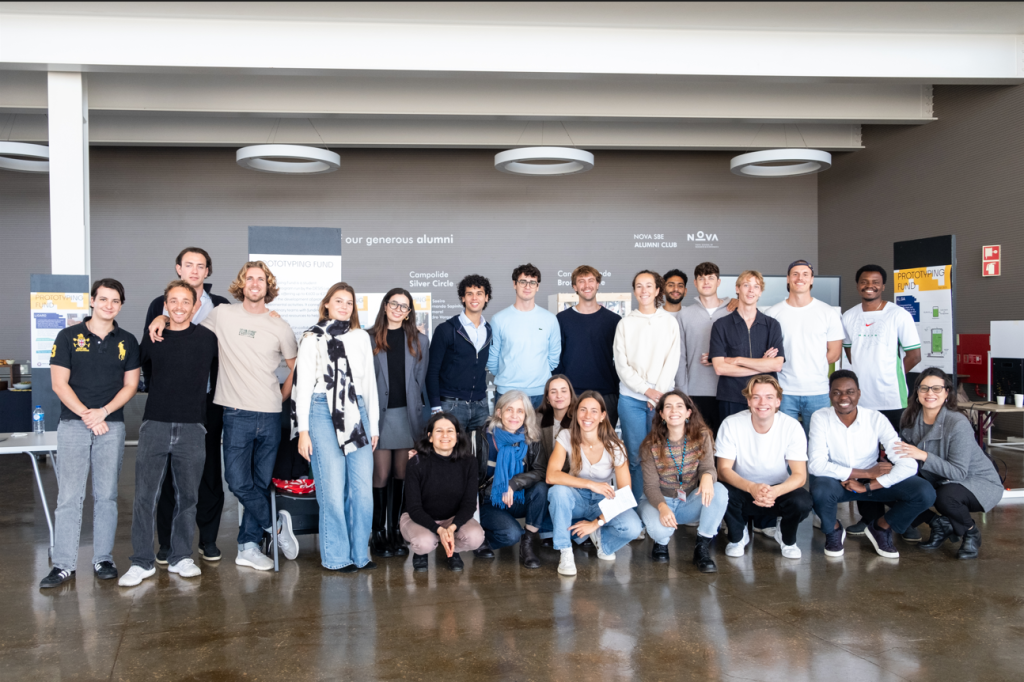
On November 25th, 2025, Nova SBE KPMG Gallery hosted once again the Fall 2025 Prototyping Fund Showcase. The Prototyping Fund, an initiative led by the DESIS Lab @ Nova SBE (within the ERA Chair in Social Innovation), in partnership with the Haddad Entrepreneurship Institute aims to support students’ ideas addressing social and environmental issues. It provides them funding (up to 600 euros in phase 1, and up to 1,500 euros in phase 2) to build hardware, software or service prototypes, and connects them with the resources, tools, and mentors they need to bring their ideas to life.
This fall, 13 teams of students representing multiple Master’s at Nova SBE as well as some multidisciplinary collaborations between Nova students and other universities in Portugal and across Europe. Their projects ranged from designing a device to predict temperature break in medicine / food transport to developing an AI power mobile app providing digital self-therapy for jaw disorders (bruxism and TMJD), producing a biodegradable, non-toxic wood and paper adhesive or creating an e-learning platform providing accessible AI education content for teachers and professionals. Make sure to read the list provided below to learn about all the projects that cover a variety of domains: healthcare, education, inclusion and sustainability.
The Prototyping Fund is at its core about experimentation, learning and collaboration. We invite participants to think of prototypes as “questions embodied” and to think of the Prototyping Fund as a space to experiment, test their ideas (with users!), and to iterate. It was therefore inspiring to hear one member of VerdeWall tell us as he showed us the prototype his team built this semester: “Now we know how to build it, and we need to understand how it works.” Their next steps, he explained, were refining the prototype, but also figuring out how well it helped in cleaning the air (i.e. understand how it works).
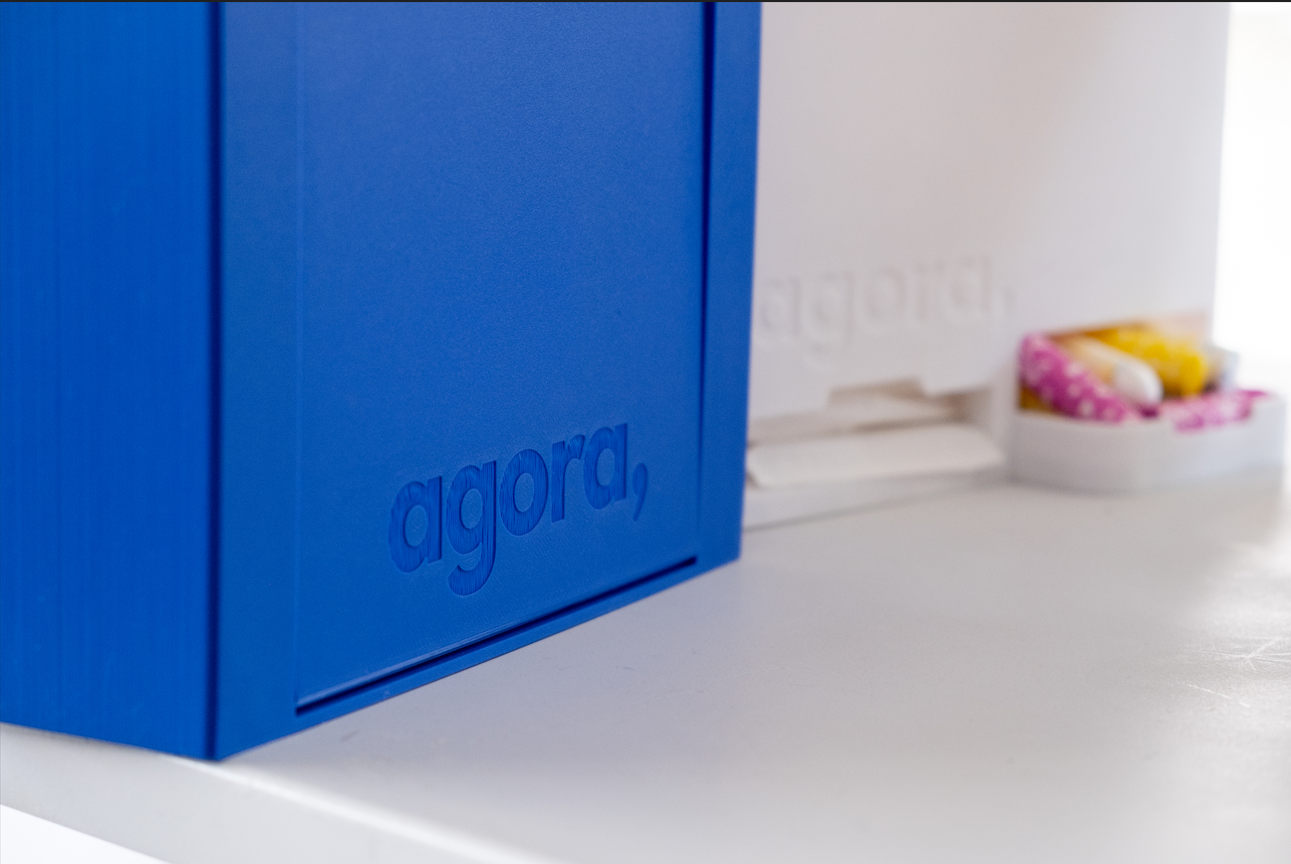
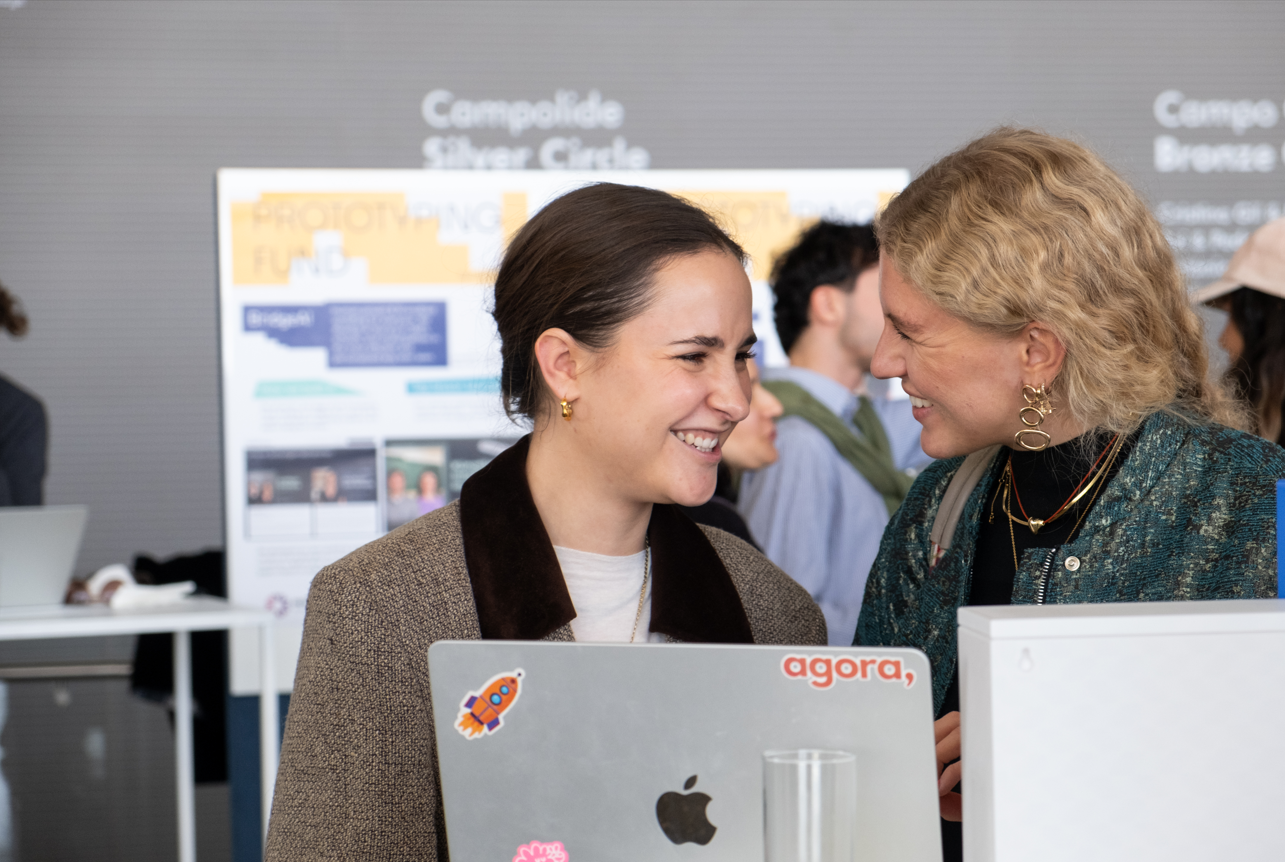
“Learning and growth” was what the Plastnatur team mentioned as they reflected on their participation, which allowed them to build the first functional prototype of their Smart Bin. Agora team noted that participating to the second phase of the Prototyping Fund not only allowed them to experiment with a new version of their dispensers (based on users’ feedback) but most importantly, it forced them to think about who their users were and what was their value proposition. The team was excited to announce that they now were officially an organization: “It’s real; we are continuing”.
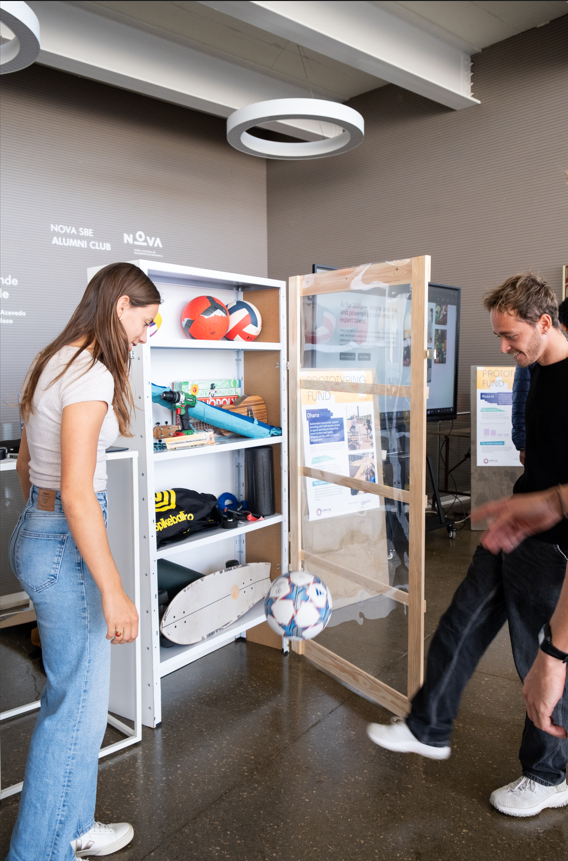
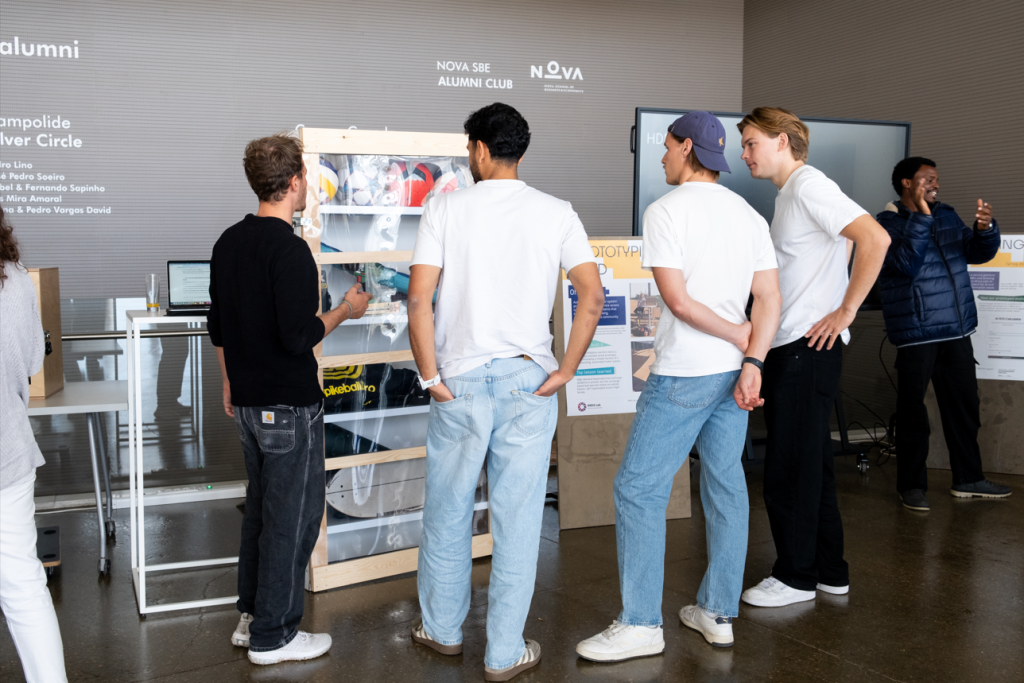
Last, it was great to see Ohana’s cabinet for shared equipment for students, fully built, filled with sport equipments and some games, and a functioning locking app. As the team is now looking to get feedback from students borrowing the shared equipment, we were happy to offer them to move the Ohana cabinet to the Konnect area so that they can continue their prototyping. Don’t forget to check it out next time you pass by the Konnect space.
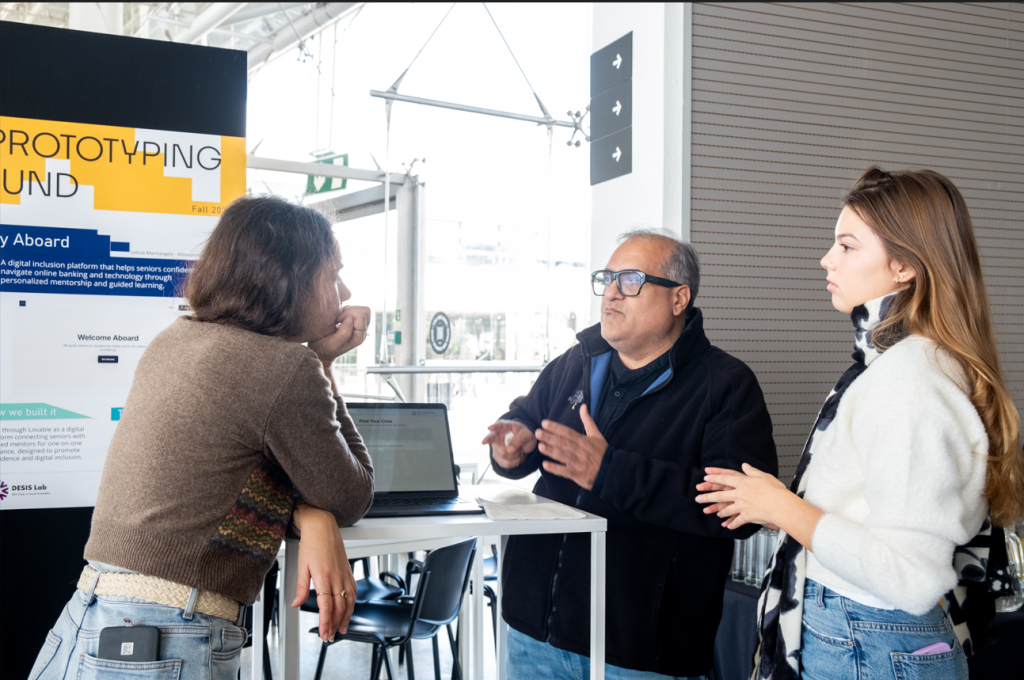
Once again this year Prototyping Fund illustrates the value of experimentation, feedback and collaboration, and we are sure that the teams collected much more ideas to explore as visitors stopped by and interacted with them.
We want to give a particular big thank you to André Martins and the team at FabLab Lisboa who this year again has been supporting some of the teams. We also want to thank all the mentors from our DESIS Lab and beyond: Karine Sarkissian, Joana Milla Villas, Bianca Crivellini Eger, Diliana Funtarova, Bonnie Cheuk, Wayne Suiter Matamoros,Trent Hoy, and Francesco Cara.
Looking forward to seeing these projects evolving, supporting a few in our Prototyping Fund Phase 2 and of course, discovering new projects in the spring.
The DESIS Lab Team (Anne-Laure Fayard and Beatriz Bento)
Acknowledgement: The Prototyping Fund was supported by the ERA Chair in Social Innovation, which is funded by the European Union’s Horizon 2020 research and innovation program under grant agreement No. 951735
My Aboard
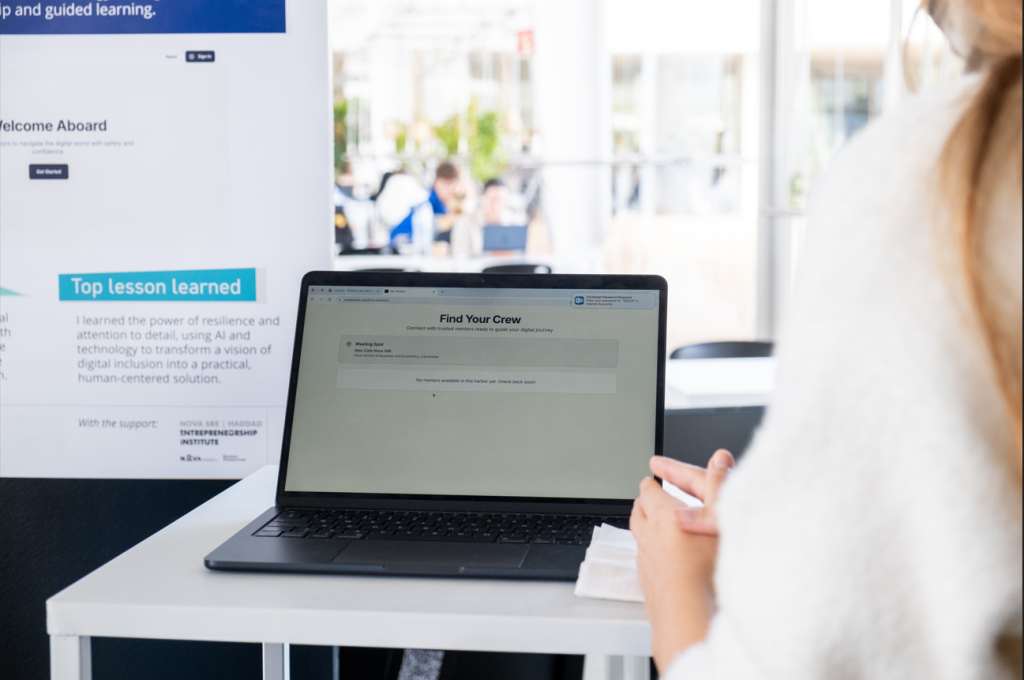
A digital inclusion platform that helps seniors confidently navigate online banking and technology through personalized mentorship and guided learning.
How we built it
Built through Lovable as a digital platform connecting seniors with trained mentors for one-on-one guidance, designed to promote confidence and digital inclusion.
Top lesson learned
I learned the power of resilience and attention to detail, using AI and technology to transform a vision of digital inclusion into a practical, human-centered solution.
Team
Leticia Marinangelo – Management, 2027
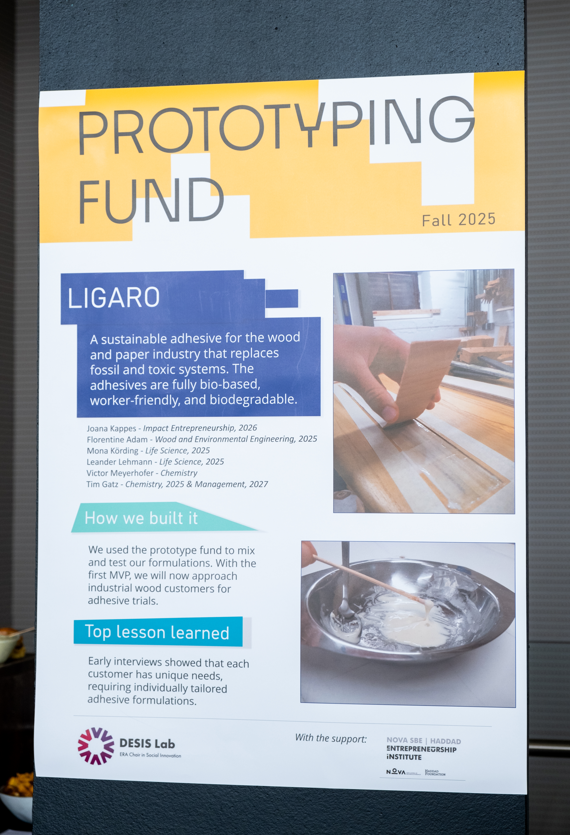
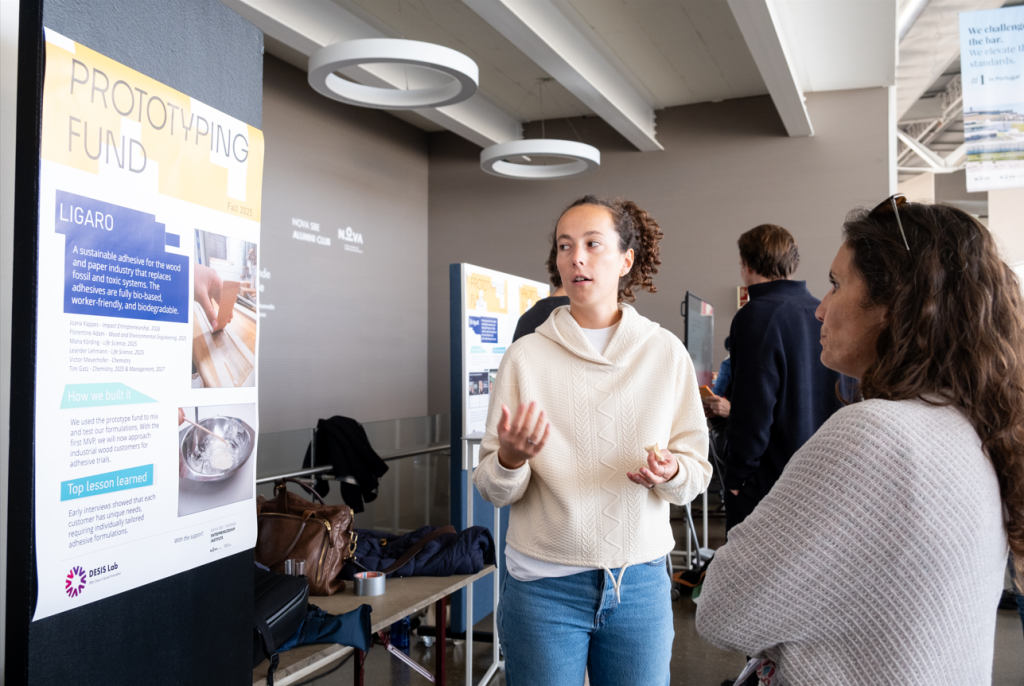
LIGARO
A sustainable adhesive for the wood and paper industry that replaces fossil and toxic systems. The adhesives are fully bio-based, worker-friendly, and biodegradable.
How we built it
Built a printed card deck using thick matte paper via local copyshops; includes colorful illustrations and comes in a compact, portable box (still work-in-progress).
How the prototyped evolved since the 1st cycle
We used the prototype fund to mix and test our formulations. With the first MVP, we will now approach industrial wood customers for adhesive trials.
Top lesson learned
Early interviews showed that each customer has unique needs, requiring individually tailored adhesive formulations.
Team
Joana Kappes – Impact Entrepreneurship, 2026
Florentine Adam – Wood and Environmental Engineering, 2025
Mona Körding – Life Science, 2025
Leander Lehmann – Life Science, 2025
Victor Meyerhofer – Chemistry
Tim Gatz – Chemistry, 2025 & Management, 2027
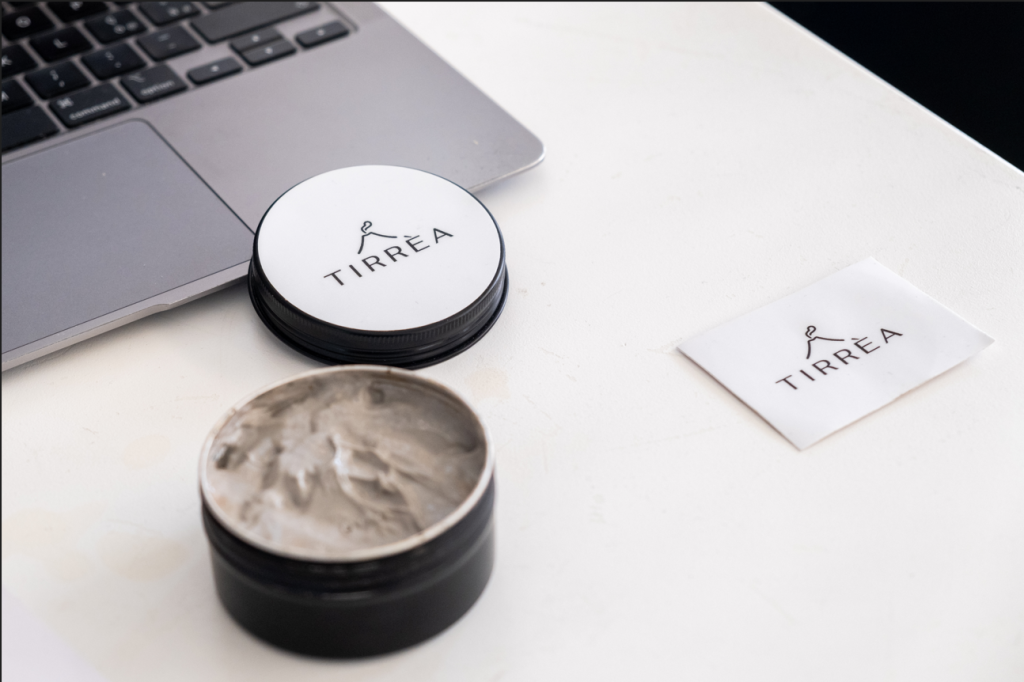
Tirrèa
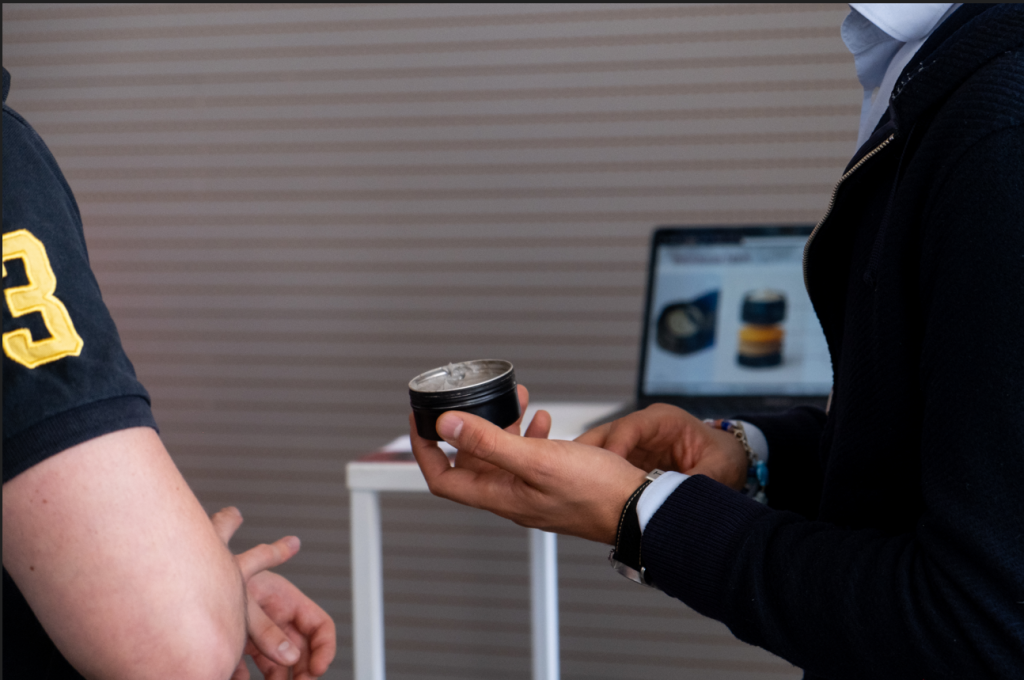
Organic skincare line made with volcanic ash from Mount Etna, blending bio innovation and Sicilian heritage to evoke a deep emotional bond with the island.
How we built it
Created with a Sicilian lab using only local bio ingredients and volcanic ash of Mount Etna to express authenticity, care, and connection to the island.
Top lesson learned
Entering markets beyond your expertise limits your agility, but the right partnerships unlock better solutions and sustainable growth.
Team
Giovanni Passanisi – Management, 2026
Lorenzo Polli – International Management, 2026
Rocco Leone – Business Administration, 2026
Purify
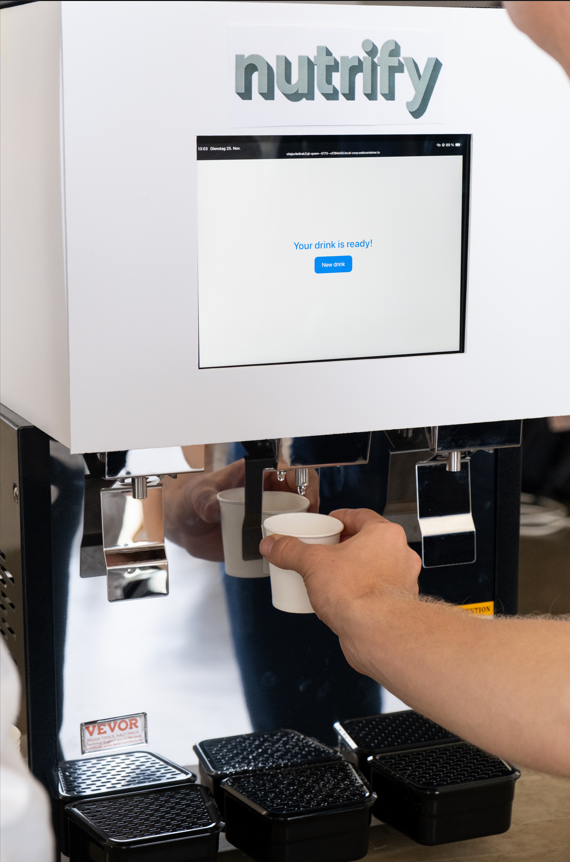
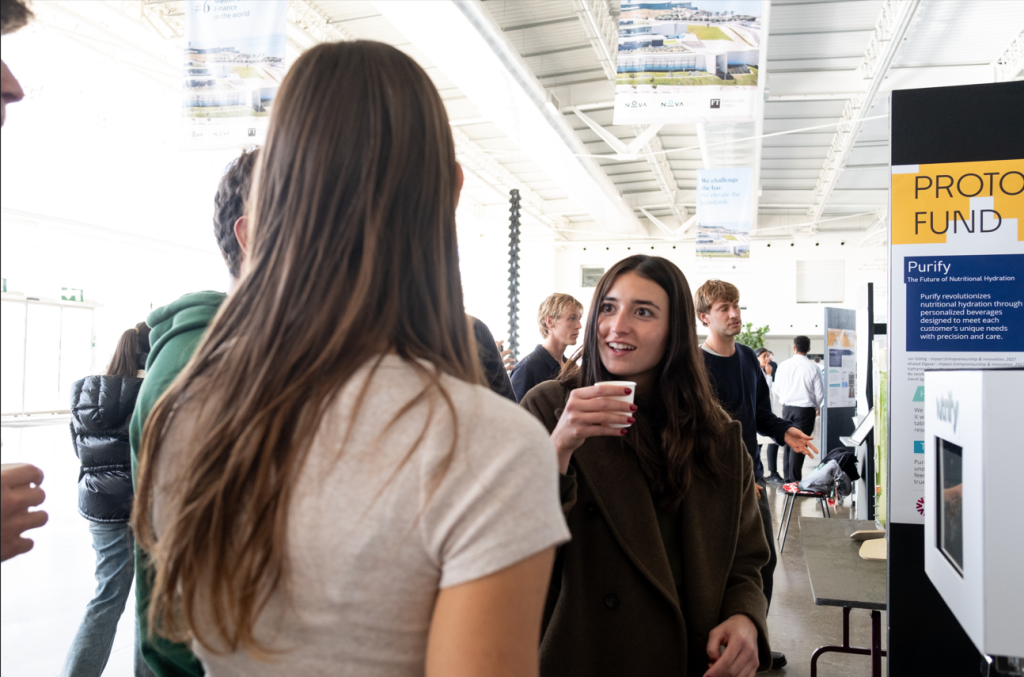
Purify revolutionizes nutritional hydration through personalized beverages designed to meet each customer’s unique needs with precision and care.
How we built it
We prototyped the refilling machine, combining it with personalised user experience through a tablet. The goals were to verify the problem and research customer demand.
Top lesson learned
Purify’s possible success starts with understanding its customers. Continuous feedback, prototyping, and iteration create a true product–market fit.
Team
Jan Göttig – Impact Entrepreneurship & Innovation, 2027
Khaled Elgazar – Impact Entrepreneurship & Innovation, 2027
Katharina Gessner – Impact Entrepreneurship & Innovation, CEMS MIM, 2027
Bo Jacobs – Impact Entrepreneurship & Innovation, 2027
David Sgorbati – Impact Entrepreneurship & Innovation, 2027
PlastNatur®
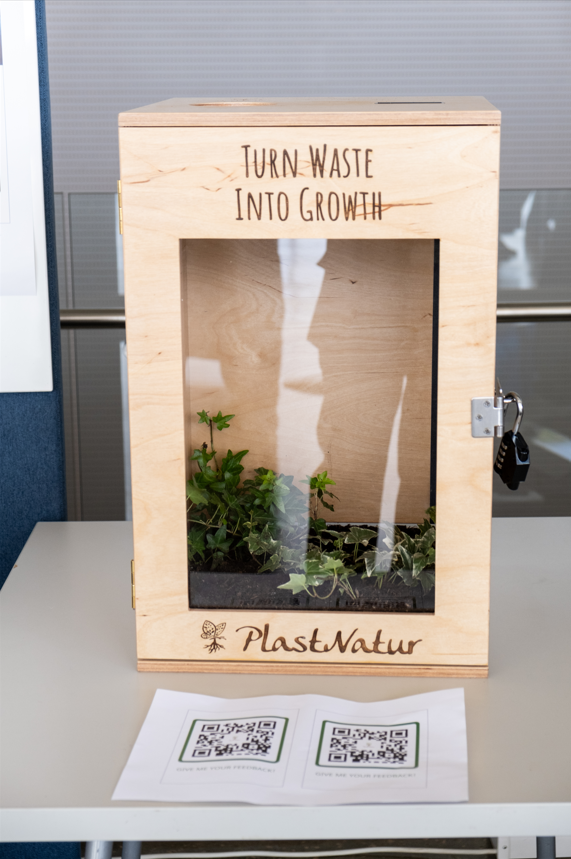
A smart bin prototype designed to promote circularity by collecting PlastNatur® compostable cups, tracking user behaviour and impact, while raising awareness through educational materials.
How we built it
Single-unit prototype built from wood, acrylic box (for soil and plants), sensor, analog counter, metal latch and padlock, signage. Hand-assembled using basic tools.
Top lesson learned
User behaviour and client interest must be tested early: circularity depends not only on materials, but on motivation, visibility and clear communication.
Team
Ana Soares – Medicine, 2010
Isabel Giorgioni – Science in Sustainability Studies, 2025
Giovanni Pio Atripaldi – Economics and Public Policy, 2026
JawBuddy
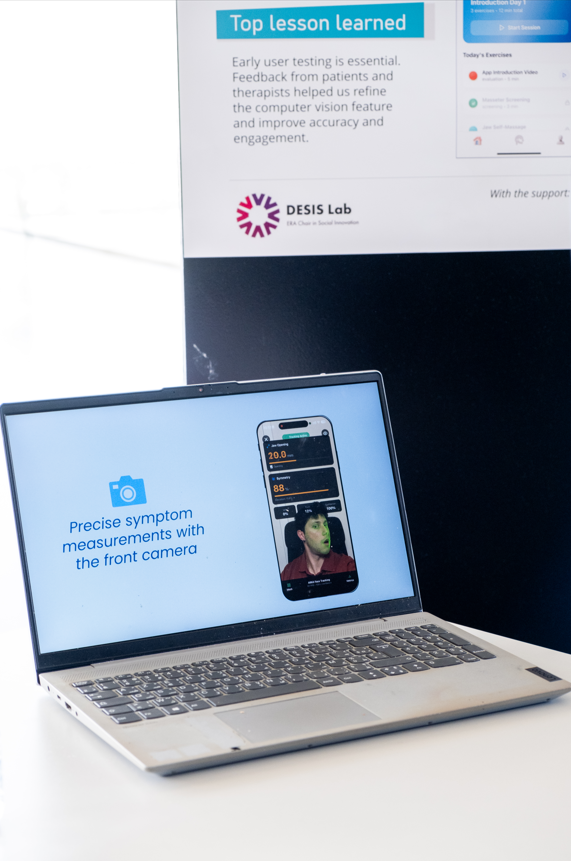
A digital health app that helps people with TMJ disorders reduce jaw pain through AI guided exercises, education and stress management.
How we built it
Built with templates and AI tools, our prototype uses computer vision to detect jaw movement and guide TMJ patients through exercises.
Top lesson learned
Early user testing is essential. Feedback from patients and therapists helped us refine the computer vision feature and improve accuracy and engagement.
Team
Leon Rauch – Master in Management, Nova SBE, 2025
Moritz Scherer – PhD Physiotherapy, Hochschule Trier, 2026
Benjamin Cádiz de Gracia – MSc Cybersecurity, Universidad de Castilla La Mancha, 2021
Dr. Christian Wolf, MD and DDS, University of Bern – MBA Candidate Universidad Isabel I, 2025 Amal Boulila – MSc Business Analytics, Nova SBE, 2026
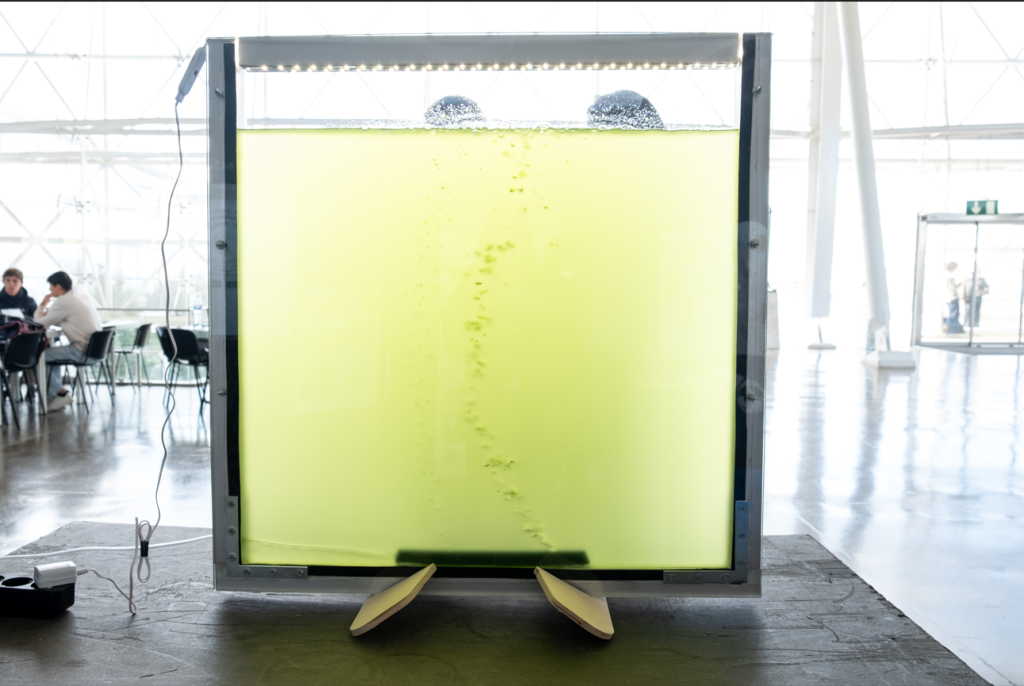
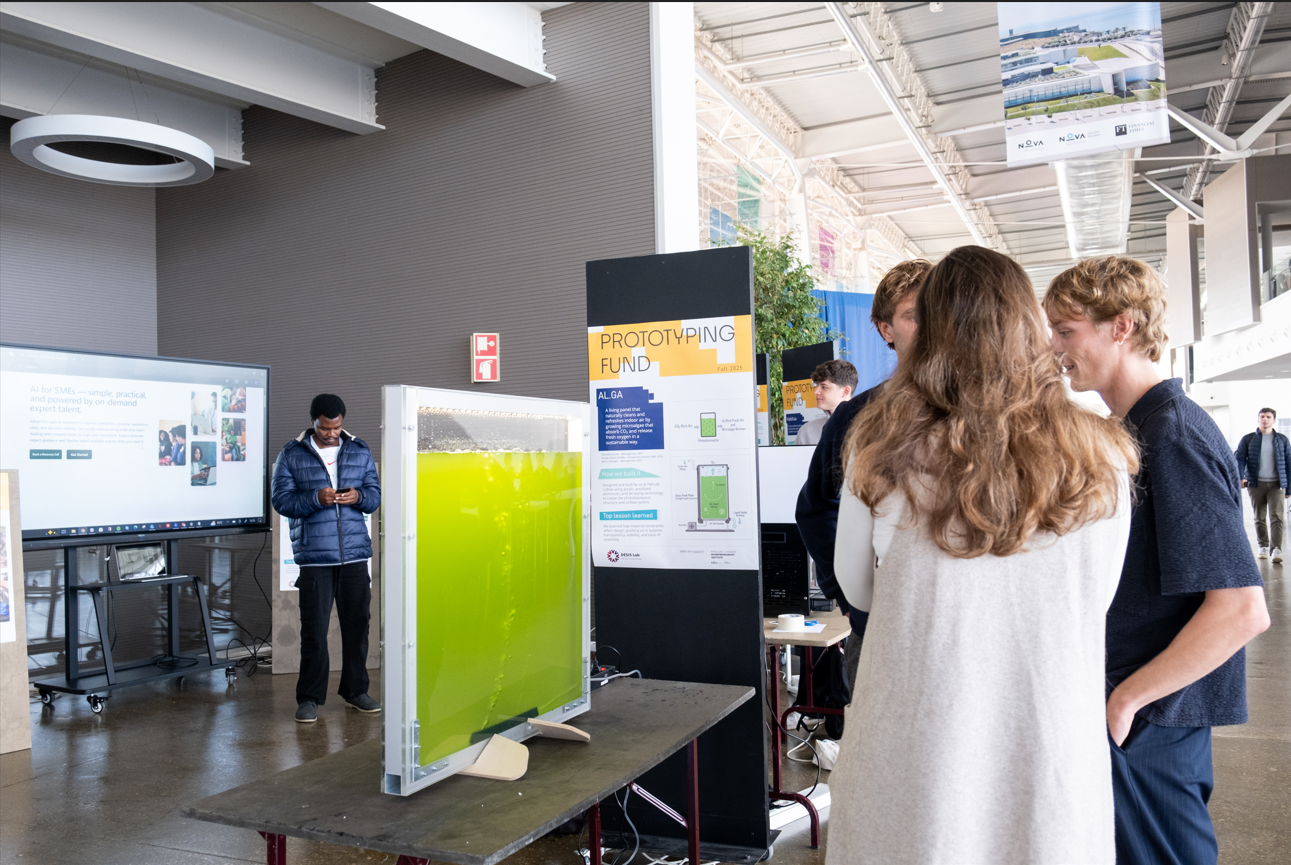
AL.GA
A living panel that naturally cleans and refreshes indoor air by growing microalgae that absorb CO₂ and release fresh oxygen in a sustainable way.
How we built it
Designed and built by us at FabLab Lisboa using acrylic, anodized aluminium, and air-pump technology to create the photobioreactor structure and airflow system.
Top lesson learned
We learned how material constraints affect design, pushing us to balance transparency, stability, and ease of assembly.
Team
Thimothy Bucher – Management, 2027
George Rafael Castilllo – Entrepreneurship & CEMS, 2026
Senne Delanghe – Management, 2027
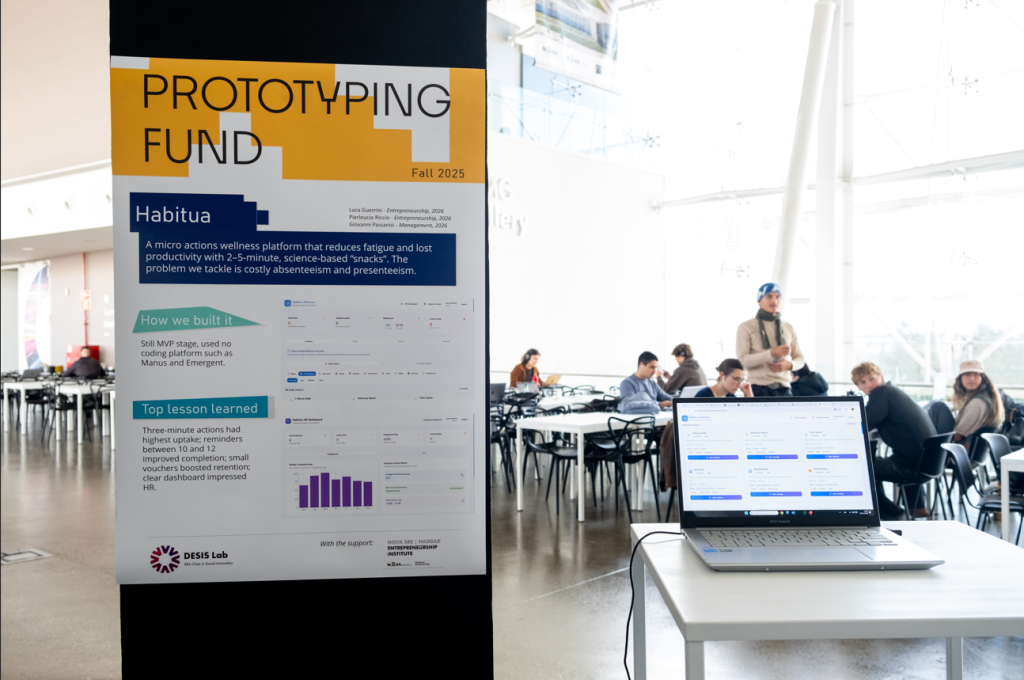
Habitua
A micro actions wellness platform that reduces fatigue and lost productivity with 2–5-minute, science-based “snacks”. The
problem we tackle is costly absenteeism and presenteeism.
How we built it
Still MVP stage, used no coding platform such as Manus and Emergent.
Top lesson learned
Three-minute actions had highest uptake; reminders between 10 and 12 improved completion; small vouchers boosted retention; clear dashboard impressed HR.
Team
Luca Guerrini – Entrepreneurship, 2026
Pierleucio Riccio – Entrepreneurship, 2026
Giovanni Passanisi – Management, 2026
Ohana
Automated rental locker system providing 24/7 self-service access to sports and leisure items that boost student well-being, physical activity, and community engagement.
How we built it
Demand validation via form led to a concierge-assisted rental prototype. Now developing a simple version of a freestanding, automated locker system.
Top lesson learned
High demand (especially from exchange students) is proven, but the concierge-based test was too reliant on outside factors. 24/7 automated access might be key.
Team
Moritz Meyer – M.Sc. Impact Entrepreneurship and Innovation, 2026
Gabriele Inama – M.Sc. Impact Entrepreneurship and Innovation, 2026
Zita Merle – M.Sc. Impact Entrepreneurship and Innovation, 2026
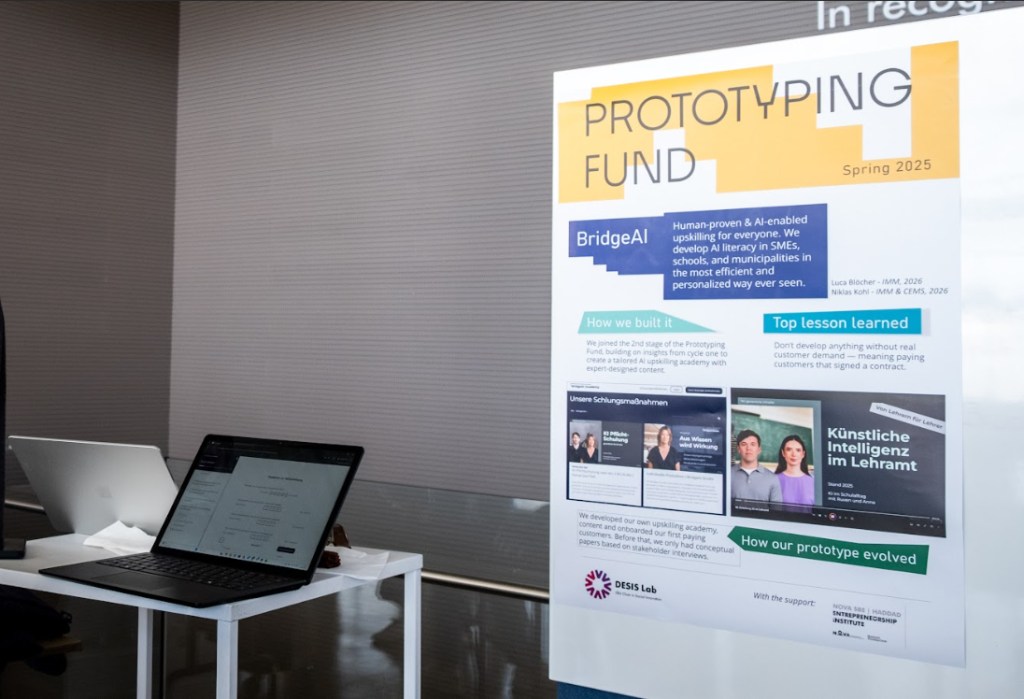
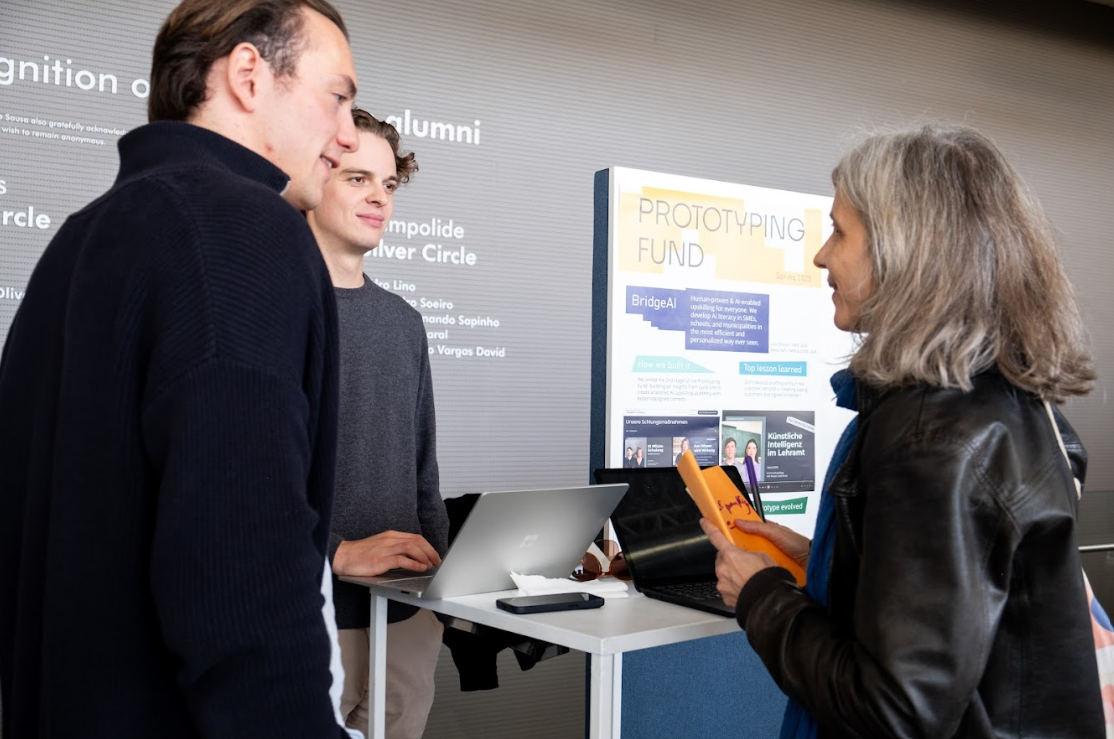
BridgeAI
Human-proven & AI-enabled upskilling for everyone. We develop AI literacy in SMEs, schools, and municipalities in the most efficient and personalized way ever seen.
How we built it
We joined the 2nd stage of the Prototyping Fund, building on insights from cycle one to create a tailored AI upskilling academy with expert-designed content.
How our prototype evolved
We developed our own upskilling academy, content and onboarded our first paying customers. Before that, we only had conceptual papers based on stakeholder interviews.
Top lesson learned
Don’t develop anything without real customer demand — meaning paying customers that signed a contract.
Team
Luca Blöcher – IMM, 2026
Niklas Kohl – IMM & CEMS, 2026
Kuza.io
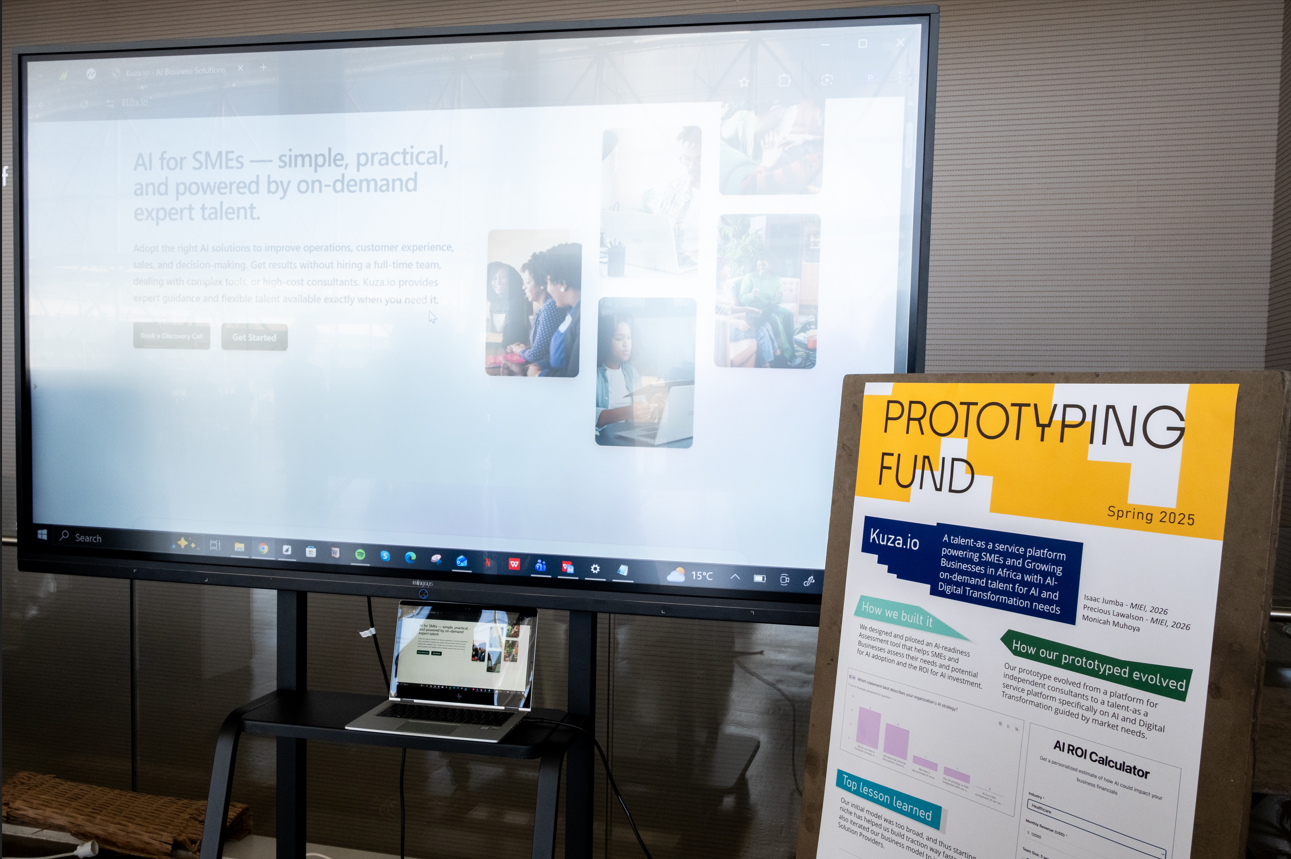
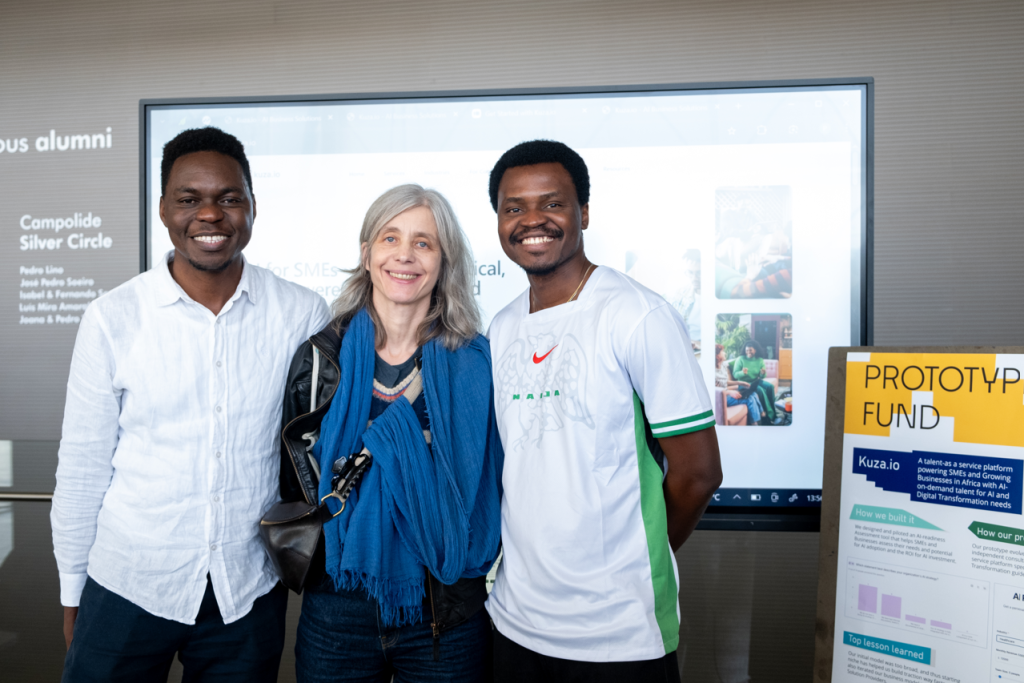
A talent-as a service platform powering SMEs and Growing Businesses in Africa with AI-on-demand talent for AI and Digital Transformation needs
How we built it
We designed and piloted an AI-readiness Assessment tool that helps SMEs and Businesses assess their needs and potential for AI adoption and the ROI for AI investment.
How our prototype evolved
Our prototype evolved from a platform for independent consultants to a talent-as a service platform specifically on AI and Digital Transformation guided by market needs.
Top lesson learned
Our initial model was too broad, and thus starting niche has helped us build traction way faster. We also iterated our business model to include AI Solution Providers.
Team
Isaac Jumba – MIEI, 2026
Precious Lawalson – MIEI, 2026
Monicah Muhoya
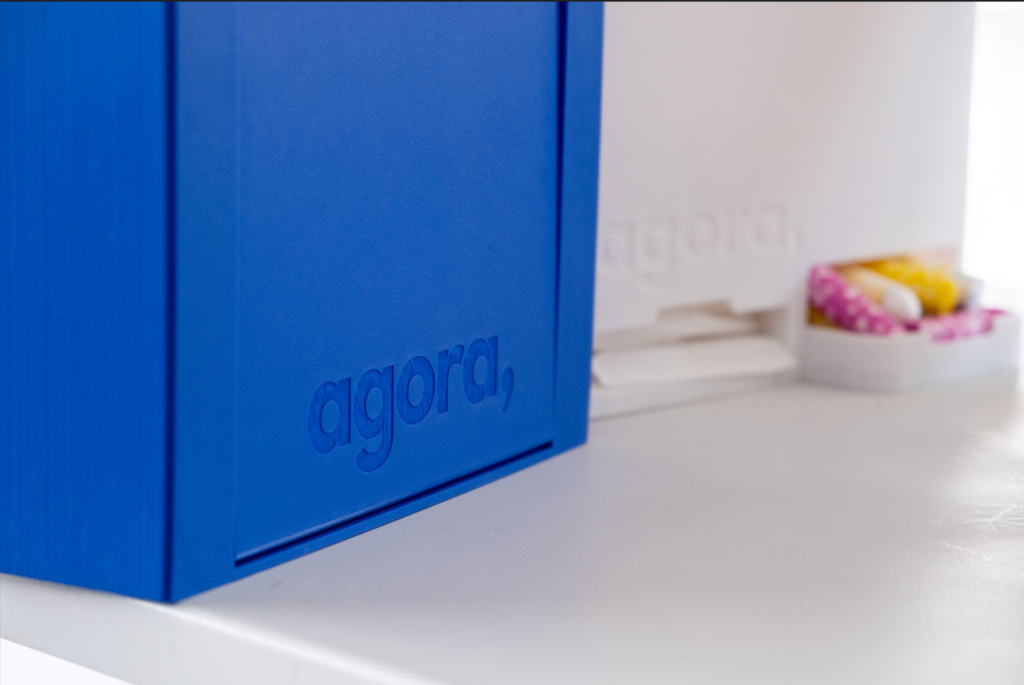
agora
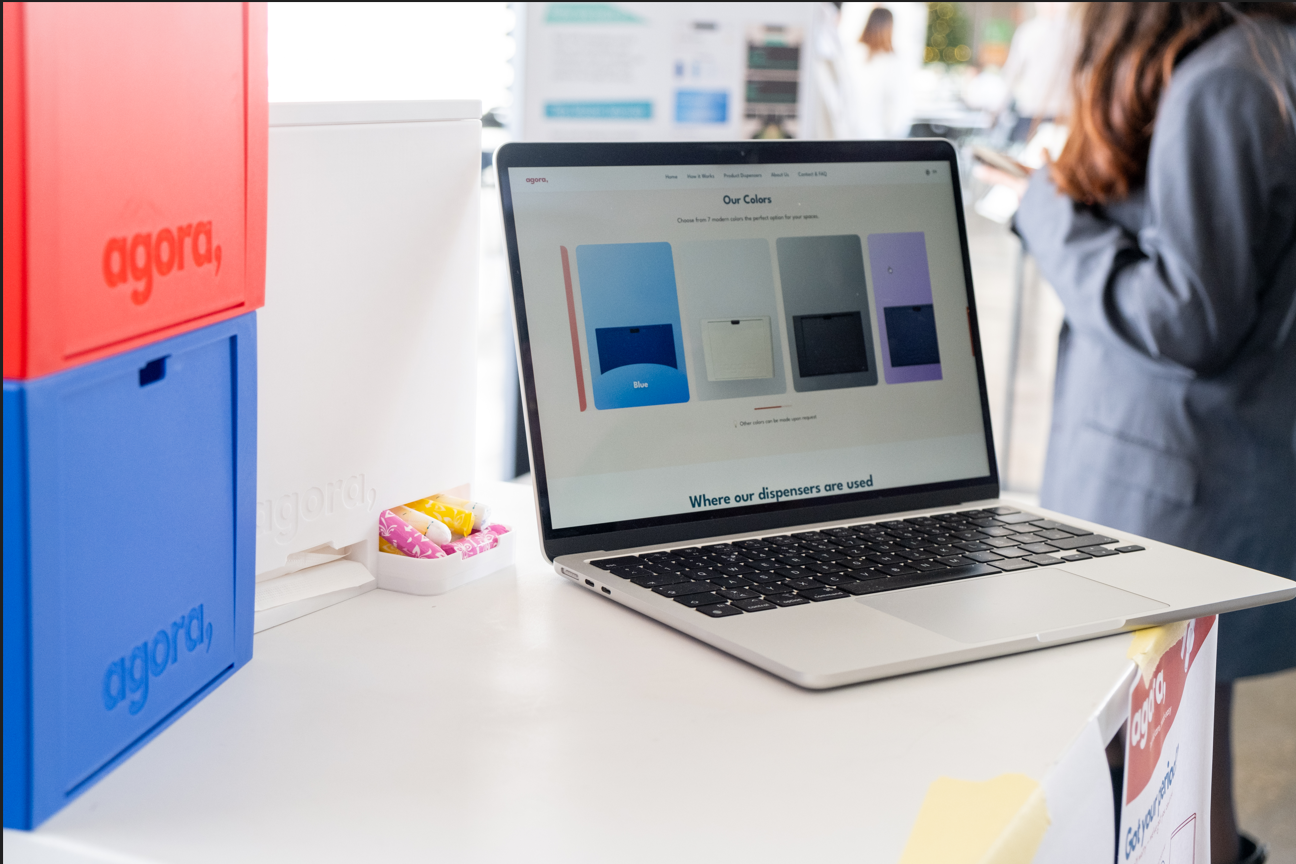
Enables organisations to offer free period products through a sustainable dispenser, tailored subscriptions, and 10% donations to fight period poverty.
How we built it
Developed and tested version V3 of our dispenser and B2B model through user research, prototyping, expert interviews and NGO and pilot partnerships.
How our prototype evolved
V3 dispenser offers more capacity for larger companies, tailored to new B2B customer segments and currently tested across additional verticals.
Top lesson learned
External validation with users and partners is crucial – real impact depends on co-creating solutions that balance feasibility, empathy and social value.
Team
Marie-Chantal Anterist 66009 – Impact Entrepreneurship and Innovation, 2026
Jakob Pöttgen 66320 – Impact Entrepreneurship and Innovation, 2026
Hannah Zapf 67231 – Impact Entrepreneurship and Innovation, 2026
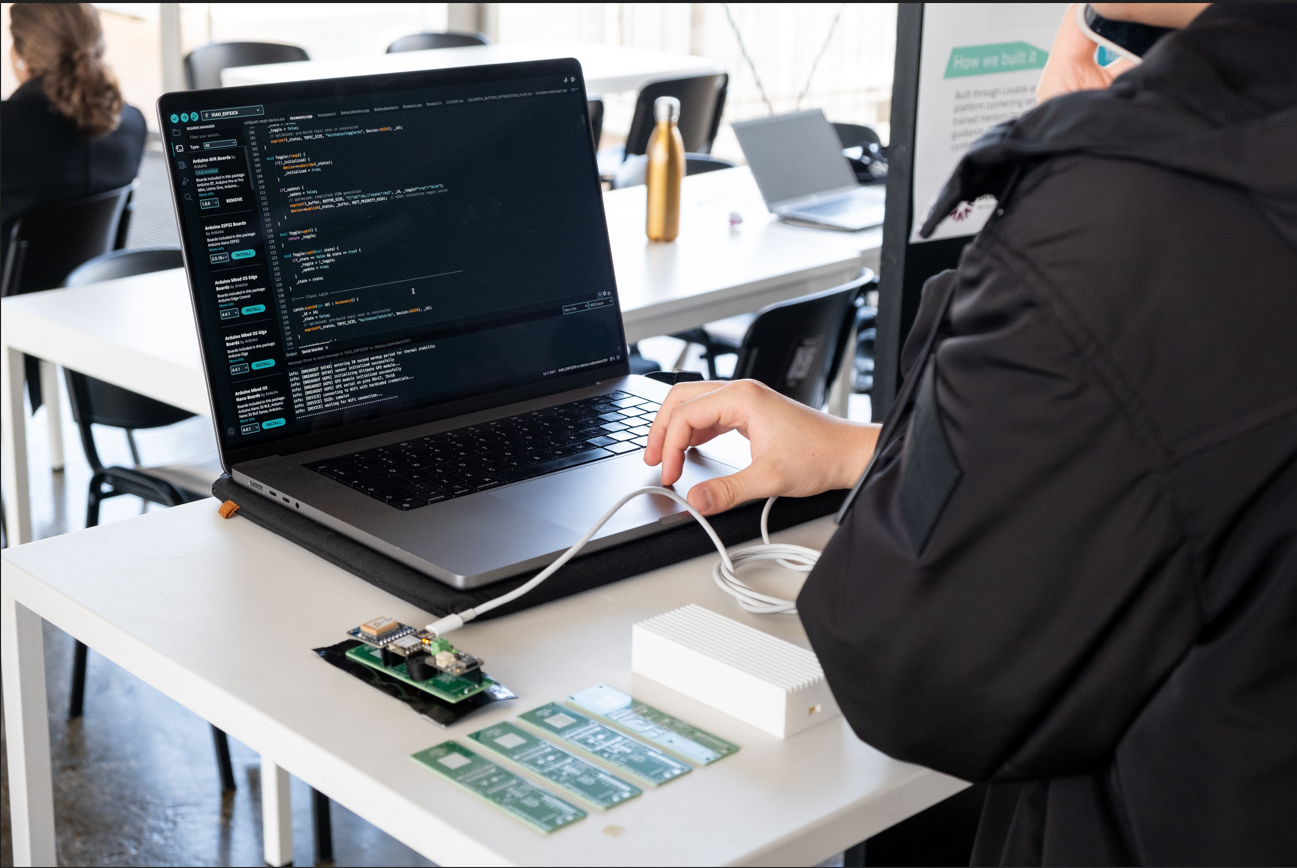
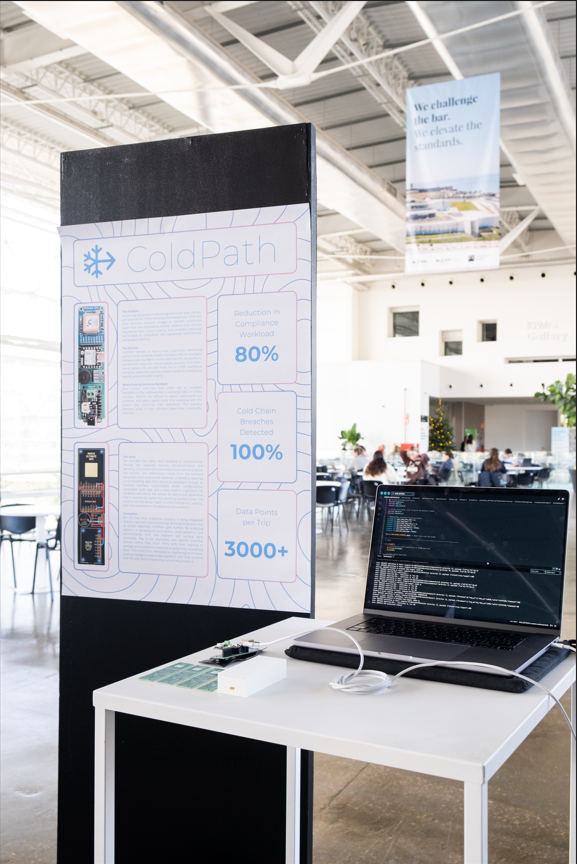
Coldpath
Smart Vape Pen that reduces nicotine concentration automatically and over time. QUIT also tracks users’ consumption behavior and feeds an algorithm to optimize nicotine cessation.
How we built it
Designed the app layout in Figma and built a prototype using nicotine and non-nicotine vapes connected to an Arduino microcontroller running custom code.
Top lesson learned
Relying on external experts like developers can slow progress—but their input is essential to build something impactful.
Team
Vivian Müller -Impact Entrepreneurship & Innovation, 2026
Toni Hofbauer -Impact Entrepreneurship & Innovation, 2026
Thank you!